Aperiodic has three updates this week.
Notebooks that demonstrate use cases
We released notebooks that demonstrate three core use cases.
1. Find new alpha
This notebook takes one question end to end: how can you find predictive alpha in Aperiodic's large dataset?
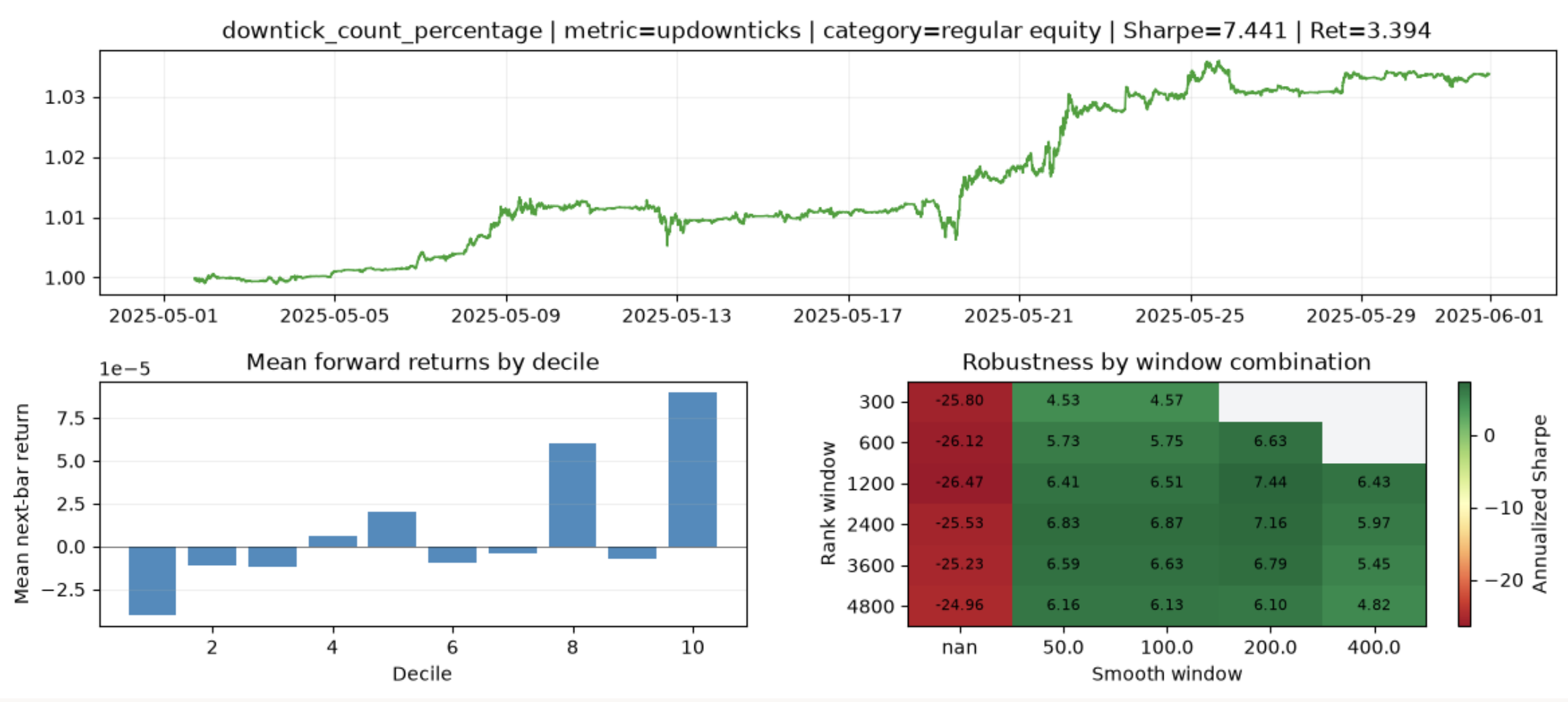
2. Improve your backtest
Demonstrates how you can use L1 price, impact and slippage metrics to build more realistic backtests that take market microstructure into account.
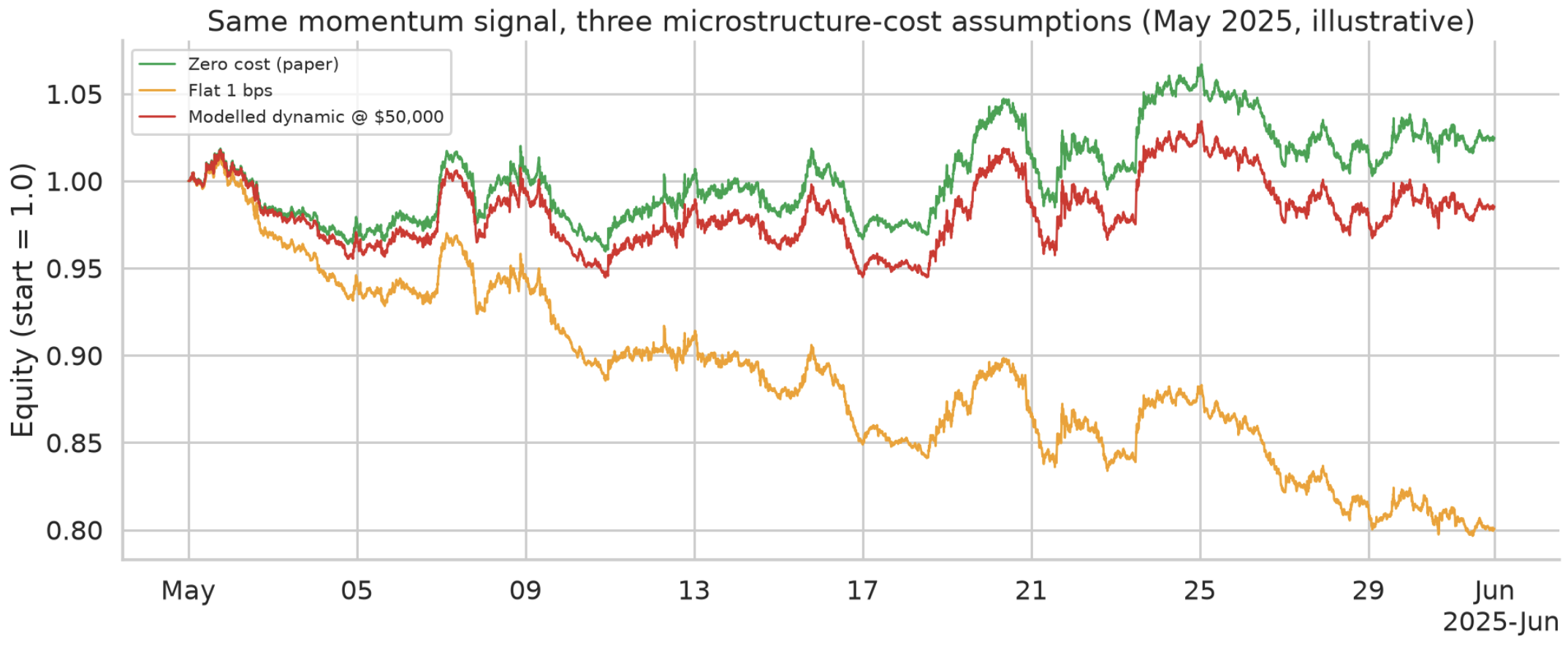
3. Execute smarter
Shows how execution cost is not constant through the day, and how to measure when liquidity is deep and spreads are narrow.
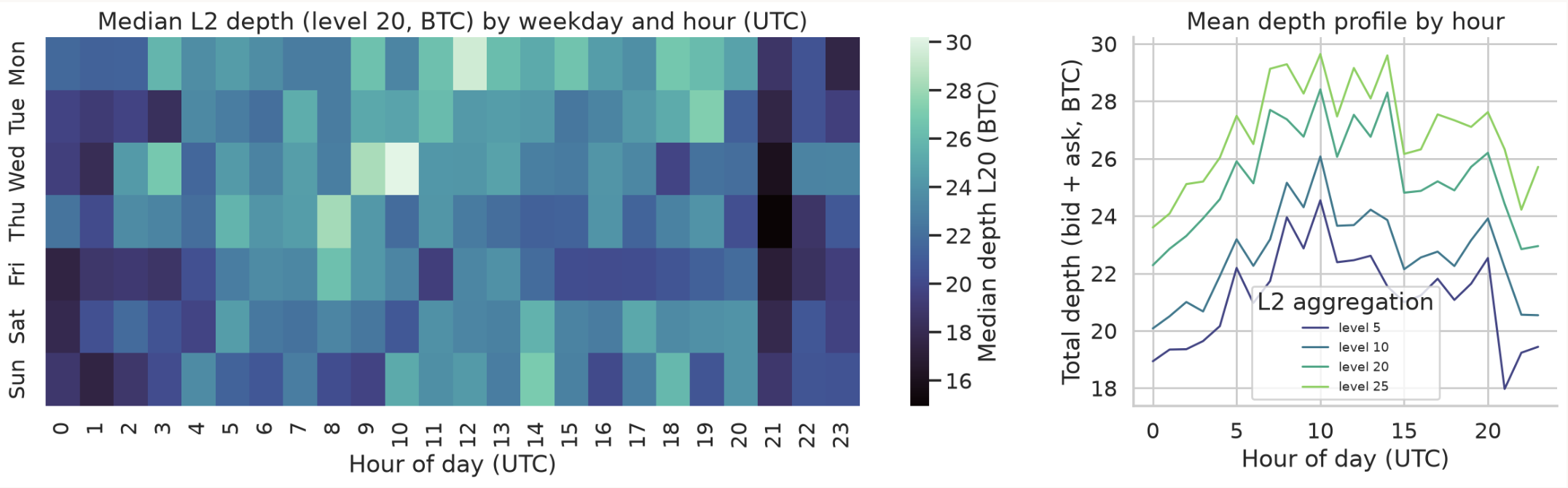
They run on the preview slice, so you can execute each whole notebook with DEMO-KEY and no subscription: in the browser, locally through the CLI, or as pre-rendered output.
Continuous, daily updates
Every day, around 15:00 UTC, the previous day's computed metrics appear and are ready to be queried as Parquet files.
This means the previous static partitioning has changed: from 1 August 2026 we serve daily partitioned Parquet files (see Daily Parquet Files). We are working on a monthly compaction process that will move that date to the first day of the current month, always.
Lower prices for historical data
Data is always getting cheaper, but quality point-in-time data, especially the kind we serve (market microstructure, derivatives, flow and liquidity metrics), is still expensive to buy or compute.
We have lowered the listed prices of our non-commercial (historical data) licences. Self-serve now runs from $29 to $699 a month billed yearly, or $35 to $879 month to month. See pricing for what each plan includes. We hope this makes Aperiodic accessible enough that "can I afford to test this?" stops being the first question.
For questions or help with integration, contact us at support@aperiodic.io.